
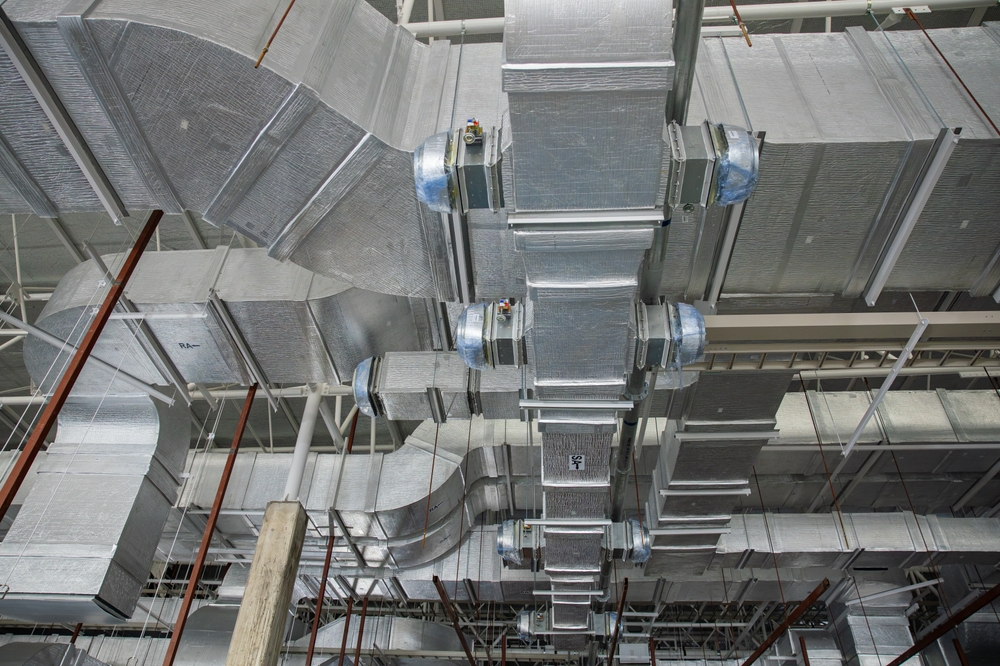
The importance of a ventilation system lies in its ability to ensure healthy, safe, and efficient environments. In all sectors, from agriculture and industry to livestock farming, proper air exchange management is essential to achieve tangible and long-lasting results.
A well-designed system enables control over temperature, humidity, and air quality, improving the environmental conditions and helping protect people, animals, and crops.
What is a Ventilation System and Why is it Essential?
A ventilation system is a set of devices designed to control airflow within an environment, ensuring continuous air exchange between the interior and exterior. Its primary function is to maintain air quality by removing excess heat, humidity, harmful gases, and pollutants.
Understanding the importance of a ventilation system means recognizing its central role in ensuring healthy, comfortable, and energy-efficient environments.
In specific contexts of livestock farming and greenhouse cultivation, the question “why is a ventilation system important?” can be clearly answered through four key benefits:
- animal welfare;
- healthy growth of flowers and plants;
- improved working conditions for staff;
- energy savings.
The importance of a ventilation system: Key benefits for agricultural settings

To achieve optimal yields from indoor cultivation in general, and greenhouse crops in particular, it is essential to install high-efficiency agricultural ventilation systems.
Understanding the different types of ventilation solutions designed specifically for this sector, and selecting the most suitable one for your facility, leads to several key benefits:
- Humidity and temperature control. Maintaining stable environmental conditions promotes efficient photosynthesis, reduces plant stress, and enhances overall crop quality.
- Disease prevention. A consistent airflow prevents condensation and excess humidity buildup, limiting the spread of molds, bacteria, and fungi.
- Growth optimization. A uniform microclimate enables faster and more homogeneous vegetative growth, improving both yield resource efficiency.
It’s particularly important to highlight the importance of greenhouse ventilation, as it directly affects plant health, especially under high temperature conditions.
The importance of a ventilation system for livestocks
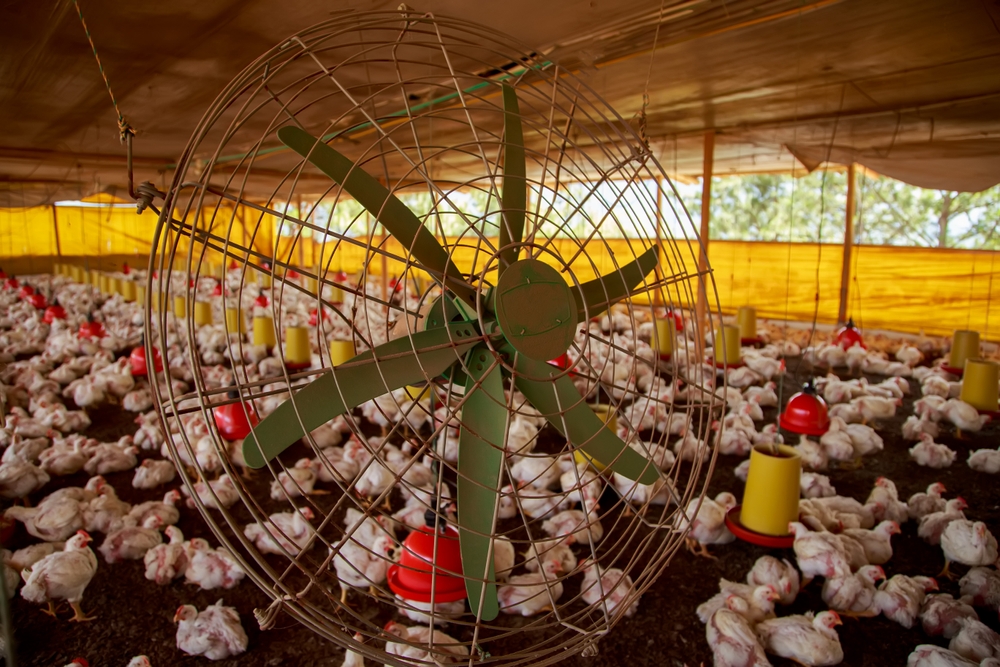
Livestock ventilation systems play a crucial role in animal farming operations, as they contribute to:
- Reducing heat stress. By keeping internal temperatures more stable during the hotter months, they help prevent drops in productivity drops and physiological issues in animals.
- Limiting the concentration of ammonia and harmful gases. Improved air quality reduces exposure to irritants and substances that can damage the respiratory system.
- Preventing disease spread. Constant airflow helps inhibit the proliferation of pathogens and reduces excess humidity.
- Improving animal welfare. Stable and healthy environmental conditions promote overall health and encourage more natural, balanced animal behavior.
In environments such as poultry houses, pig farms, or cattle sheds, ensuring a constant airflow enhances animal health and reduces the need for veterinary treatments, delivering benefits from both an economic and environmental perspective.
The importance of a ventilation system in industries
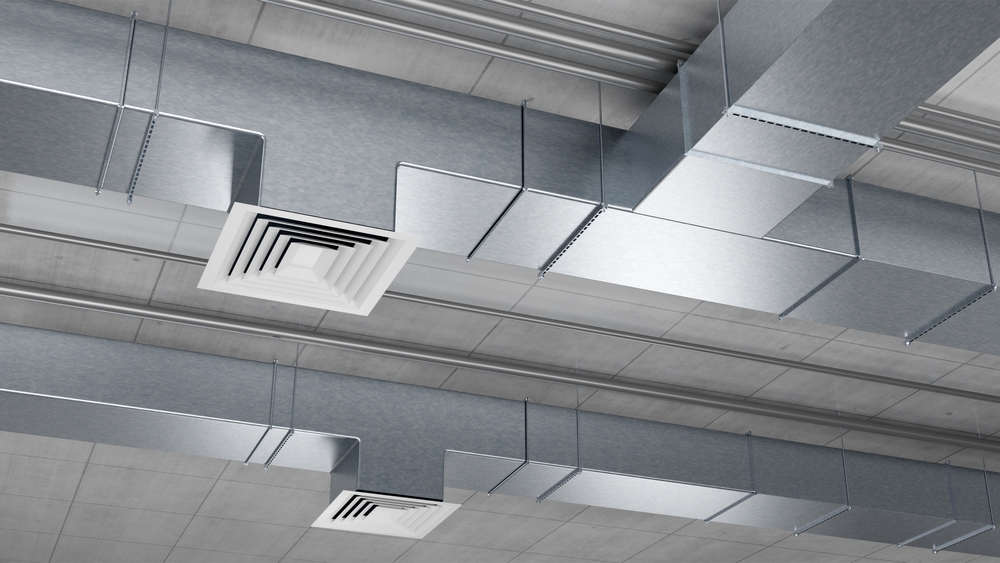
In a company, installing an industrial ventilation system means:
- Ensuring worker safety. Better air quality reduces risks related with exposure to hazardous substances and improves overall conditions in production areas.
- Removing fumes, dust, and volatile organic compounds (VOCs). Continuous air exchange prevents the buildup of harmful pollutants, protecting both people and equipment.
- Controlling machinery temperature. Preventing overheating and maintaining optimal conditions increases machinery reliability and reduces the risk of breakdowns.
- Ensuring regulatory compliance.Meeting health and safety regulations also depends on having efficient and properly sized ventilation systems.
Specific solutions like exhaust ventilation systems are designed to extract contaminated air, improve workplace air quality, and support compliance with current standards.
Common ventilation challenges and how to overcome them
An effective ventilation system must overcome several technical challenges, that can compromise its performance and long-term reliability:
- Inadequate design. A poorly sized system or one that is not tailored to the specific environment can hinder air quality and airflow efficiency, resulting in waste and reduced effectiveness.
- Insufficient maintenance. Dirty filters, damaged fans or faulty controls can drastically reduce system performance, increase energy consumption and jeopardize safety.
- Balancing efficiency and costs. Striking the right balance between environmental well-being and energy cost savings requires the integration of advanced technologies, automated controls, and a flexible, scalable design.
With decades of experience in the field, Termotecnica Pericoli provides efficient solutions that effectively meet these challenges. High-performance fans, modular systems and advanced environmental control technologies ensure reliable and effective ventilation, even in the most complex environments.
Choosing the right ventilation system for your needs
The choice of the most suitable ventilation system depends on the application context and the specific requirements of each sector. Termotecnica Pericoli offers a wide range of solutions, specifically designed to meet these needs with precision.
In agriculture, for instance, the offering includes fans and circulators, as well as evaporative cooling systems such as PERIcool, ideal tools to create a favorable microclimate for crop development, improving both yield and product quality.
In the livestock sector (poultry, dairy, swine), direct-drive or cone-shaped exhaust fans, along with permanent magnet motor air circulators, ensure proper air exchange in sheds and help reduce heat stress, thereby enhancing animale welfare.
For the industrial sector, the range include exhaust air ventilation systems, belt-driven extractors and air circulators.
In protected crops, especially for greenhouses and mushroom farms, Pericoli’s offering features extractors and circulators specifically engineered to maintain a uniform and stable microclimate, essential for optimal crop growth. Among these, models such as EWD, EOS, and EOC deliver effective removal of hot, humid air, while ACF and ACFp circulators promote consistent air distribution throughout the structure.
All products can be integrated into modular and customizable systems, adaptable to both new or existing installations. The aim is to ensure efficiency, durability, and easy maintenance across all operational settings.